

In early March, two unidentified gunmen on motorcycles opened fire on Iraq’s most notable women’s rights activist, Yanar Mohammed, as she stood outside her home in the north of the capital, Baghdad. She had long been the target of death threats from Islamic State and other armed groups.
Her death was the latest of several killings of well-known female figures in Iraq in recent years, who were either prominent advocates for women’s rights or notable individuals. In early April, soon after Yanar’s death, a female lawyer known for supporting girls was also murdered.
Speaking to the Guardian and Jummar Media, women in Iraq say the murders have had a chilling effect on their ability to speak out at a time when women’s rights and freedoms in the country are going backwards.
Last year, the Iraqi parliament passed a law permitting children as young as nine to marry, with activists saying it legalised child rape, trapped them in abusive relationships and brought lifelong consequences for underage girls because of unfinished schooling.
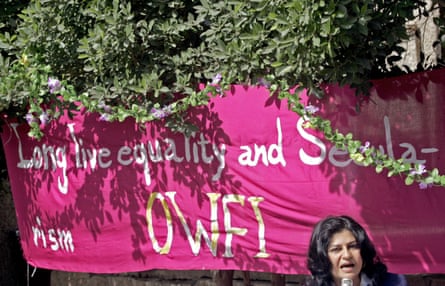
Mohammed had returned to Baghdad in 2003 after the US invasion and founded the Organization of Women’s Freedom in Iraq (OWFI), which established the first shelters in the country for women threatened with death or abuse. She went on to create a network of 11 safe houses across the country.
As well as protecting women, the shelters also acted as a space for rebuilding their lives and skills, giving them economic empowerment and independence.
Like other female activists in the country, Mohammed had long faced threats and intimidation for her work in supporting women. “She was revolutionary unlike any woman we have ever known, and despite all the threats, she never stopped,” says Tamara Amer, head of the Iraqi Women’s Rights platform.
“Do we continue [our work], or will they kill us too now?” says her friend and fellow activist Iqbaal al-Aamli, founder of the Edrak Centre for Women’s Rights.
“No one did what she did. Despite the large numbers of women, she memorised their names and stories, followed the details of their daily lives, even the type of mattress they slept on and the quality of their food, and she personally visited the safe houses to ensure they were truly safe.
“She didn’t view women as victims, but as survivors capable of saving others and she prepared them to go on and do that. She helped many return to education and some to even read and write for the first time in their lives,” says Aamli.
As well as organising the refuges, Mohammed ran public awareness campaigns through the media about sexual slavery, human trafficking and violence against women, demanding gender equality. She also documented the conditions of female survivors in the shelters, especially those who had been rejected by their families.
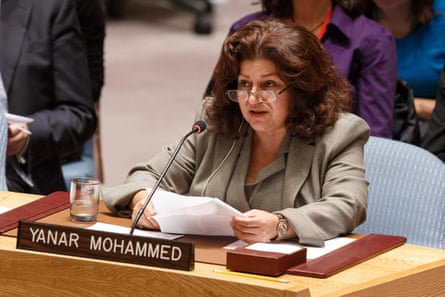
Tamara says Mohammed never abandoned a girl even in challenging circumstances and recalls extremely difficult cases, including one young girl, Aya al-Mousawi, who suffered severe psychological trauma after being harassed and stabbed 20 times by her father, who also severed her thumb.
“We have not seen anyone care about our cause as much as she did, even more than the state,” says one Yazidi activist and survivor of Isis atrocities, who says Mohammed opened the safe houses to every survivor whose family refused to help them, regardless of their background.
Iraqi Women’s Rights says Mohammed’s assassination was part of a “dangerous context of systematic targeting of female activists” in the country.
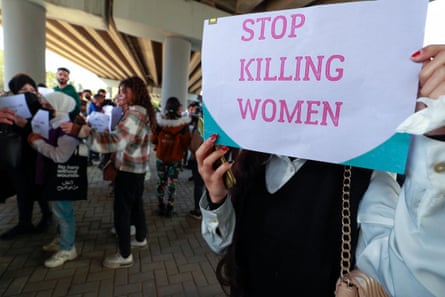
Other Iraqi activists have detailed to the Guardian threatening messages they had been sent, including personal details and identification of their homes and workplaces.
They say the lack of any prosecutions of Mohammed’s killers – there has been no public statement about the state of the investigation or if anyone has been arrested – has left women more fearful, and that perpetrators of attacks on activists are rarely identified.
A female psychiatrist in Basra, Dr Ban Ziad Tariq, was killed at the end of 2025, but her death was recorded as a suicide. This sparked public outrage, with activists who covered her case arrested.
Suha*, an Iraqi women’s rights activist, says she has stopped defining herself as a feminist and deleted posts from her blog and photos of her participating with Mohammed in demonstrations against the sharia legal code, fearing for her safety. While she continues to write articles about women’s rights, she now does so under pseudonyms.
As well as direct threats from extremist groups in the country, Mohammed’s organisation also faced legal action in 2020 by officials of Iraq’s Council of Ministers on charges of harbouring “runaway” women and encouraging them to leave their families – accusations the organisation strongly denied, saying the women were victims of violence and forced marriage.
Staff, who wished to remain anonymous, say the safe houses and her organisation’s work will continue. “We will complete this path that Yanar started,” they say, “because they want to keep us silent and eliminate us. But we will never deviate and we will not stop; Yanar created inspiring women out of every victim.”
* Name has been changed to protect her identity
-
Produced in collaboration with Jummar, an independent Iraqi media platform