

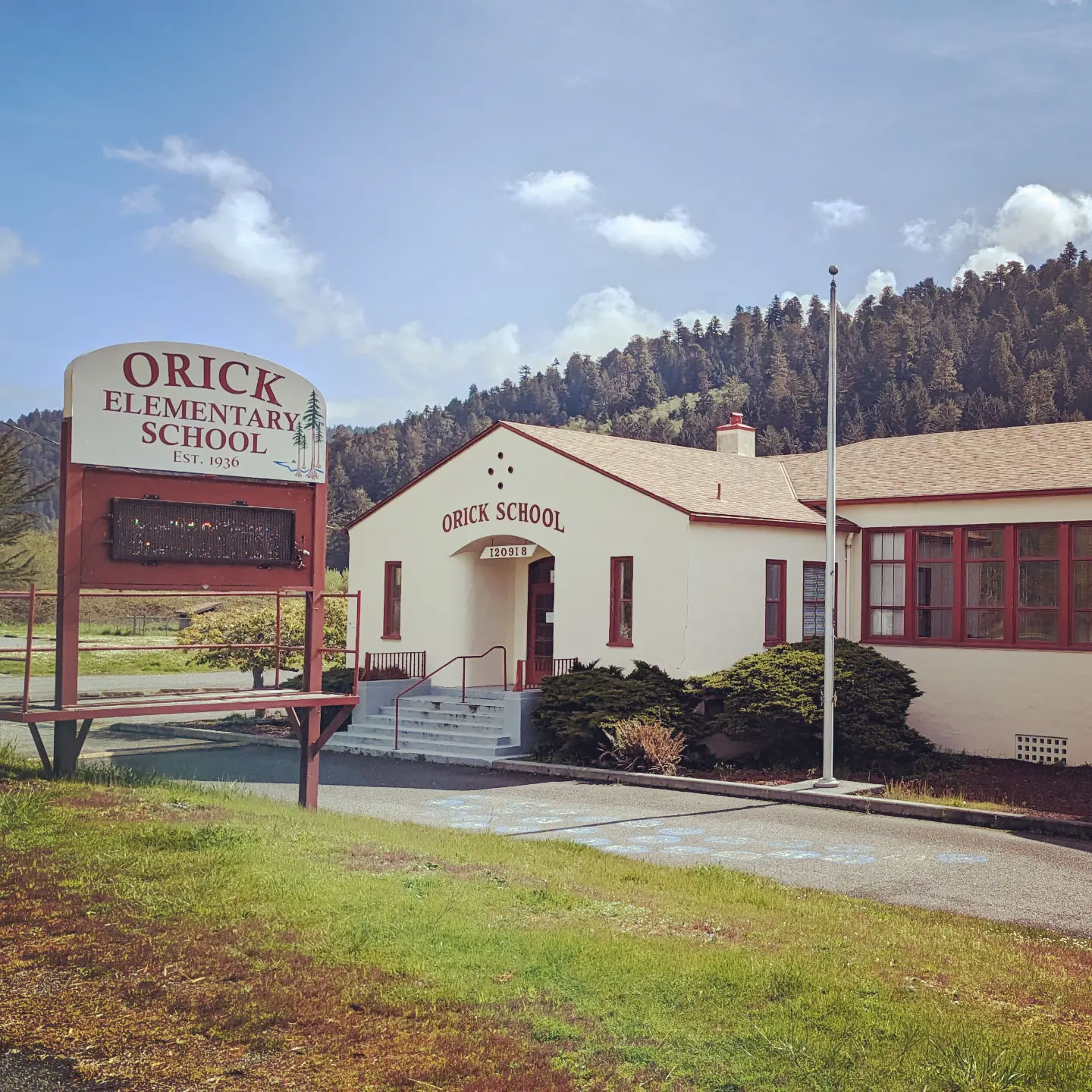
A tiny Northern California school with just nine students is costing about $118,000 per child each year to keep open—but locals say it is vital.
Orick’s historic school in Humboldt County has five classrooms, a gym, a vegetable garden, and a large play field, according to CalMatters.
While city schools across California deal with falling enrollment and higher costs, rural schools like Orick face even tougher challenges. If the school closes, the whole community could be at risk.


“Close the school? It comes up all the time,” Orick Elementary School District Superintendent Justin Wallace said.
“But I’d say it’s an equity issue. We have families who can’t afford a lot, and this school provides the most consistent setting for our kids. They’re safe, they’re well fed, they’re learning.”
Orick used to have 3,000 people, almost 300 students, seven lumber mills, grocery stores, restaurants, churches and even a movie theater.


Now, the town has about 300 residents, and the average household income is just under $39,000 a year, which is about a third of the state average.
According to the school’s accountability plan, residents deal with high rates of poverty, unemployment, food insecurity, domestic violence, substance abuse, and involvement with the criminal justice system. These problems are made worse by limited resources and “intergenerational trauma.”
The school has become far more than a place for class. It operates a food pantry, gives away clothes, hosts Narcotics Anonymous meetings, runs a toddler playgroup, and even bought a washer and dryer so residents have somewhere to do laundry, per the outlet.
Kimberly Frick, a fifth-generation Orick School attendee who now serves as school board president, said keeping the school alive is tied directly to keeping Orick alive.

“I feel terrified about the possibility of the school closing. I’d hate to see it happen on my watch,” Frick said. “The facility is clean, safe, well maintained. We provide a high-quality, individualized education for each child.”
Last year, the school received $774,000 from state and federal governments. All nine students are low-income, more than half receive special education services, and in some years multiple students are homeless or in foster care.
The school employs four full-time staffers—two teachers, an administrative assistant, and Wallace, who also serves as principal, literacy coach, and special education director—plus several part-time workers.
Heating bills can run $1,100 a month, and even swim lessons require a 30-mile drive to McKinleyville.
Merging with the nearby Big Lagoon Union Elementary District, 15 miles south, would save less than $200,000 a year because the combined district would take on new costs, including transporting students 30 miles round-trip each day.
Wallace also said a merger would alienate one of the two communities, both of which fiercely value their independence and local control.

Locals argue Orick School offers something bigger schools can’t. Older kids already bus 40 minutes each day to high school in McKinleyville, and Wallace and Frick said it’s unrealistic to put younger children on long rides through Humboldt County’s dark, rainy winters, when roads can be blocked by fallen trees, floods, and mudslides.
The school also offers outdoor education, with students raising trout and steelhead, testing creek water, learning local ecology, and studying Native traditions.
About half the students are Native American, and a Yurok volunteer regularly teaches Yurok culture through hands-on activities, CalMatters said.
“I mean, come on, how many other schools are in such an incredible setting?” Frick said. “Orick is a great place to go to school.”