

A rogue mini-town is rising inside Los Angeles’ billion-dollar homelessness crisis, where the homeless are building tiny homes with TVs and air conditioning, and selling them on the street for as little as $100.
Just weeks after The California Post exposed a filthy LA River encampment where one resident died of an overdose days later, another hidden world has surfaced, this time in the heart of the Fashion District.
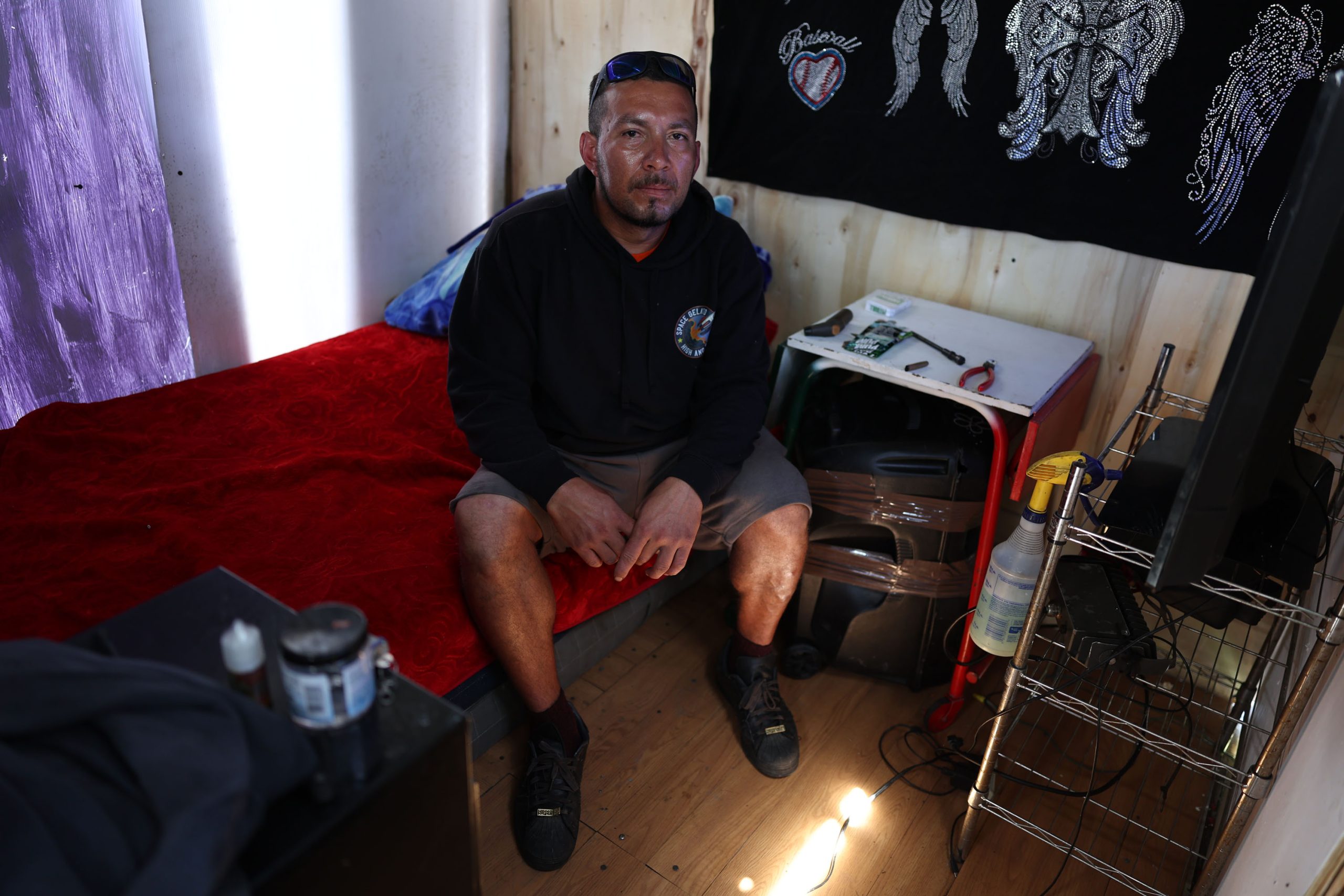
The Post visited a makeshift home Tuesday built by Osvaldo, 38, a burst of bright orange, green and yellow on the outside.
Inside, the small structure is surprisingly put together; with a bed, a television and even air conditioning.


“I clean up… every day,” he said, describing how he mops his floors at least once a day.
Before living in his home, Osvaldo lived a block away in a tent and tarp but said.. It was “Too much fighting… drugs… everything,” he said of where he used to stay.
Previously, he spent six years homeless in Orange County, later moving to Los Angeles for work, but still getting by on odd jobs. “I work so I can buy my food,” he said.


Now, he’s building makeshift homes for others on the street. For about $100, he puts together their own versions, wood-framed, enclosed structures that offer a clear step up from tents and tarps.
“I made like… almost 10 houses so far,” he said.
His own home is the only one fully painted with bright finishes. Most of the others are subdued, some still raw with exposed wood, partial walls and unfinished frames.


He wants to paint, finish and turn them into something more permanent, something people can actually live in.
Just down the road, one of those unfinished homes belongs to Kathryn, 40, who says she’s been homeless for decades.
She walked us through what she has now, a small structure she calls a bedroom and a bathroom.

It’s basic. Bare. Still coming together. But she pointed to an open space and described what she said will soon be the living room.
Back at Osvaldo’s space, there’s another sign of how he lives, small green plants growing outside his home.
Green beans. “I planted like… six, seven… little beans,” he said.

All of it unfolds as Los Angeles pours staggering amounts of money into a system still struggling to keep people housed. The city spent more than $1 billion on homelessness programs in recent years.
Every homeless person we spoke to said they weren’t being offered services and couldn’t remember the last time they saw outreach teams from the Los Angeles Homeless Services Authority.
The Post reported on Monday that one major effort alone cost roughly $300 million, aimed at moving people off the streets and into housing. But about 40 percent of those placed through that program ended up back on the streets within months.