

‘Sorry babe I’m a divorced mum on a buffet of magnesium glycinate, ashwagandha, peptides, and sertraline, covering a mortgage alone during late stage capitalism, idgaf about your opinion anymore,” wrote Meghan McTavish, an Australian divorce-fluencer, who went viral a couple of years ago because, even after her split, her parents refused to take down her wedding photos.
This might be the core of hot divorcee energy: an unvarnished devil-may-care spirit that seems to have captured the cultural moment this summer. So, of course, you’re wondering how this differs from the brat, last year’s aspirational muse – who also, emphatically, did not care what the world thought (though if you’re still confused about the difference between that and 2024’s hot girl summer, I suggest you go back in time and take last year’s module again).
Tatty Macleod, a comedian and writer, broke it down for me: “Brat was all about looking slightly dishevelled, still in yesterday’s makeup – you were supposed to look as though you hadn’t made an effort. At the heart of divorcee energy is: hell yeah, you’ve made an effort. Divorcee is high glam. It’s wide-brimmed hats and full-length skirts. It’s for the people who were always 40-year-old women in waiting, who were never ‘girls’. It’s Jennifer Coolidge, it’s Goldie Hawn in Overboard – highly problematic film, fantastic look.”

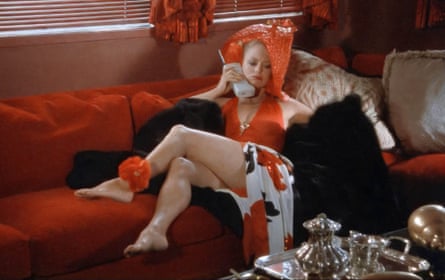
So, how long is it since Macleod got divorced? “Oh, I’m not divorced. I have a boyfriend – he’s a great man. Divorcee is an energy, it’s not a legal status. You don’t have to be divorced.” You don’t have to be menopausal or even perimenopausal; Macleod is 36. But for at least some of the divorcee requirements, being divorced is going to help.
Before you even get dressed, you have to look the best you’ve ever looked. “It’s real, the post-divorce glow-up,” said Babs Hixies, 54 (some names have been changed; I, perhaps misguidedly, invited people to choose their own pseudonyms). “Someone actually accused me of having a facelift the other day. I said: ‘No, I’m just happy and I use Korean skincare.’ You get through all the stress and wake up one day thinking: wow, I remember being this person!”
It’s one part phoenix-out-of-the-fire (though I’d be cautious around narratives of purification through devastation, since they’re also a core component of fascism) and one part intense self-care, as Floella, 52, describes: “The divorce itself is one of the only opportunities in life where you’re very introspective. You’re forced to think about yourself, what you need, what you want. I took a good few years just rebuilding. I think that’s where the glow-up comes from. I don’t know when else you’d get to do that.”


Jacqueline Fitzgerald, a partner at Laurus Law with 30 years of divorces behind her (disclaimer: she was my lawyer – I would heed her on all things, but particularly divorce), gives the “floaty dresses and floppy hats” idea very short shrift: “That’s sugar-coating a very bitter pill,” she says. But she does concede that women get a release from drudgery that men don’t get. In her experience, “men get most things done for them at home – you don’t hear them going on about how they’re having to juggle laundry and making appointments for the children and working out what’s going to happen when someone’s off sick”.
Hixies calls it a “second rebirth into your own power, which you lose when you’re going through puberty”. Women going through divorce, she says, are “often in perimenopause or through menopause, and therefore don’t have the caring hormones – therefore, you don’t give a rat’s arse what people think. It’s about becoming your own person for probably the first time in your adult life.”
Kate Daly, a co-founder of Amicable – a legal but not lawyer-led way to mediate couples through divorce – says the “social narrative” around divorce has changed in the 11 years since she set up the organisation. Not only is there less judgment around separation, but increasingly, she says, people don’t even think it’s sad. “That’s the key thing,” Daly says. “Divorce doesn’t have to be a disaster. There are different ways of doing it and it can be a joyous moment. That’s not to treat it lightly in any way, but we’ve got a stat [from Amicable’s new report, Splitting: The Bill] showing 34% of people feel relief and a sense of freedom afterwards.”
Would you have flaunted your divorcee nonchalance 50 years ago, when respectable people wouldn’t let their children play with yours and you didn’t get invited to fondue parties in case you were a vamp? I’m still, personally, going to go with “yes”. Being a divorcee when that’s what you wanted is better than any combination of melted cheese – and I do not say that lightly.
This isn’t a creed of putting aside the opinions of others altogether, by the way. There’s a whole different self-help strain devoted to that – books such as The Let Them Theory and The Courage to Be Disliked, which are just gussied-up individualism and read as obscurely resentful. Divorcee energy is very much not caring in a joyful way, which – remember – you can do without getting a divorce.

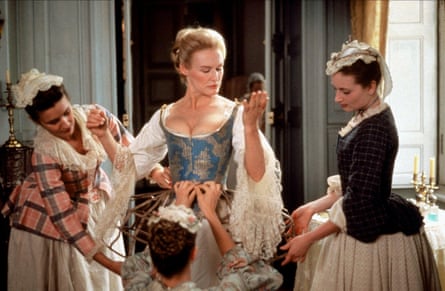
That said, you might have to do some conscious uncoupling. Divorcee energy isn’t about having a boyfriend per se. It’s about channelling the Marquise de Merteuil in Dangerous Liaisons (the film script, not the novel): “Do it, or not, with as many men as you like, as often as you like, in as many different ways as you like.” That idea of female autonomy having as its ultimate goal solitude, or at least a kind of man-free quietude, is refashioned – or, as a friend put it, more simply: “It’s like A Room of One’s Own, except there’s a hot guy in it.”
Hixies says: “I grew up with the idea that you were fundamentally unattractive as soon as you hit 35. After that, not only should you not have sex because nobody’s going to want to touch you, but you shouldn’t want to have sex because that’s just gross.” After a decade or so in this wilderness, there’s menopause, which, she says, is supposed to leave you a “shrivelled raisin who doesn’t want sex, which is good, because you can’t have it anyway – it would be like a carrot and a cheese grater. It’s all lies. It’s part of the patriarchy’s massive cover-up. You can have the hottest sex of your life.”
Although the divorcee is less a look, more a vibe, it could take your wardrobe any number of ways. Floella says she always makes an effort “because you never know who you’re going to meet. I’ve got much better underwear.” Sile Elliott – 54 in real life, 49 on Hinge – keeps it extremely simple and only ever wears a white T-shirt and jeans. “I already consider myself out of everybody’s league. I don’t want to intimidate them.”
It’s an open question what the ultimate divorcee would put in as the age range she was looking for on the apps. “This idea that only a sad sack who needs help clipping his toenails would be interested – that is also totally wrong,” says Hixies, who tends to go out with guys in their 30s. Elliott finds men in their 40s too needy and has changed her settings to 49-55, but thinks you should be able to filter it by exclusion, so you could say 25-34, then 49-55 – in other words, open season on all men except the ones likely to have a nine-year-old, be in the middle of their own divorce or be doing triathlons. Yes, some double standards again; if men described their ideal woman in terms as broad as “within this 15-year age range”, we’d say that was bad, actually. But I refer you back to item one, divorcee characteristics: she dngaf.
The classic divorcee silhouette is the “lampshade” – great big hat, plus melodramatic, floor-length dress for which the technical name is probably “gown”. “The important thing,” Macleod says, “is that it’s not minimising.” That can mean dressing all in black on a perfectly normal day, wearing a tutu when you are not a ballet dancer or wearing a hat at all (who wears a hat? You do, now).

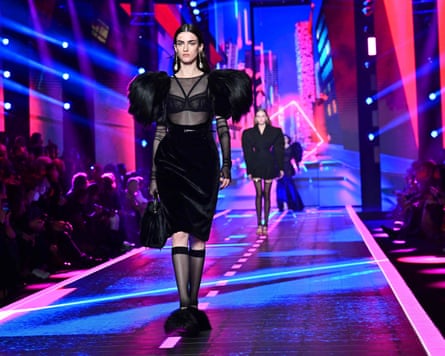
According to the Guardian’s fashion and lifestyle editor, Morwenna Ferrier, the look can be traced back to “widow chic”. She says: “The whole Dolce & Gabbana look is based on a later phase of life – black dresses and tight gloves, Sicilian widows having a second bite at life.” Carrie Bradshaw in And Just Like That, after Big dies suddenly, embarks on her hat journey for complicated reasons we don’t have time for, but it’s useful as a visual reference. The divorcee hat is much more straightforward; you’re dressing for the job you want, which is one where you suddenly have to go to Capri.
Susie Cave, whose now defunct label The Vampire’s Wife was synonymous with exaggeratedly pretty, ethereal dresses, absolute staples of every wedding, this year launched a new brand, Weddings & Funerals. The new look is not literally for a funeral, it’s just a mood: no print, loads of brocade, no cotton, loads of silk, velvet and organza, no baby pink, loads of black and gold, and possibly the most divorcee fabric in the world, which is, of course, black lace.
“My new motto is ‘Wear the fucking outfit’,” says Hixies. “Don’t wait for the moment that’s appropriate. The other day, I was doing a matching set, Erdem top and skirt, and I was only going to Tesco Express.”
You’ll have spotted a flaw, of course: at the heart of divorcee spirit is that you haven’t a care in the world, because you’ve just divorced Jeff Bezos, whereas, in real life, there is absolutely no way you’re not poorer. It’s fine; you can do melodrama off Vinted. And you don’t have to worry about wearing the same thing twice, or every day, because the kind of people who say it’s a thin line between Carrie Bradshaw and Miss Havisham are the kind of people you don’t care about.
In terms of interiors, divorced-mom-core is an interiors trend so big on the socials that it’s been slightly co-opted by people who think it should mean pastel colours and motivational statements about chardonnay, most of which are excruciating (“Mama needs wine”) and some of which are sound (“Wine moms against ICE”). But that’s not what it actually looks like.


Macleod says: “You can imagine someone going for the opposite of what a stifling marriage has looked like. Lots of colour, texture, maximalism is probably where it would take you.” For real-life divorcees, the liberation of coming into one’s own space is so palpable that it’s like a giant, magnificent piece of furniture. Daly, who has been divorced twice, says: “I will never forget that feeling when I had my new home after the divorce and every single paint colour, every single doorknob, every curtain, was my choice.”
It’s a lot easier if you live alone, but could also be achieved by choosing to cohabit with someone who doesn’t care that you have a rug bearing an image of a giant cat, and every time you see an actual cat lying on it, you start laughing. Cats have been associated for years with spinsterhood. They are quite divorcee energy, in fact; they were never brat (dogs were brat). I would get a rabbit (no, no, a real one), except the kids said no. Divorcee still cares what her kids think; that’s why so many people I spoke to for this article changed their name.
A final note on the pronunciation: always “divorceee”, never “divor-say”. You don’t want to sound like you’re joking. You’ve never been more serious in your life.